

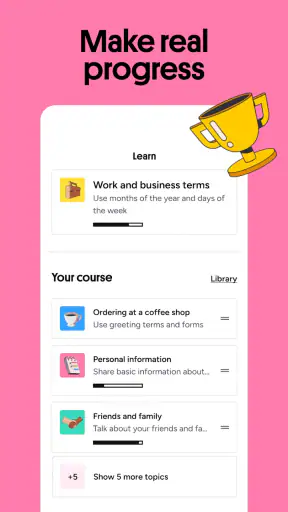
I came away from Preply with the impression that it is less like a traditional language-learning course and more like a way to arrange regular, personal practice with a tutor. That distinction matters. If you want short exercises you can complete alone whenever you have a spare moment, this may feel more involved than necessary. If your main problem is knowing what to study, finding someone to correct you, or staying accountable, the app has a much clearer purpose.
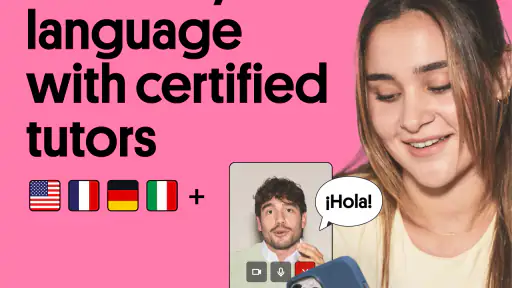
Preply is a free Education app from Preply Inc. that connects learners with private language tutors. It supports lessons for languages including Chinese, Japanese, Dutch, and Spanish, among others. The app is available for Everyone, has passed five million installs, and holds a 4.7 average from around sixty-two thousand ratings. Those figures suggest a well-established service, but they do not remove the need to choose a tutor carefully or prepare for lessons properly.
I found the most useful way to judge it is to look at the complete experience: searching for a suitable teacher, arranging a lesson, joining prepared, and recovering when something goes wrong. The app can make speaking practice much easier to organize, but it cannot make an unsuitable tutor, a weak internet connection, or an unrealistic study schedule disappear.
Where the experience usually gets stuck
Choosing a tutor is the real first lesson
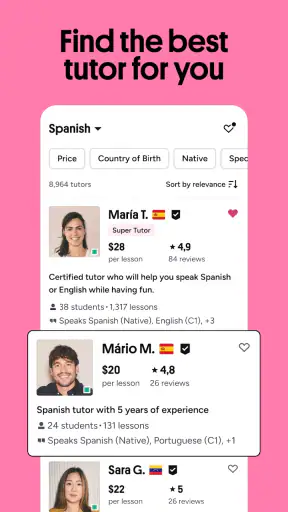
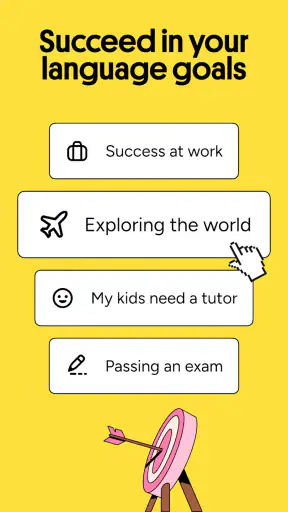
The biggest decision is not installing the app. It is deciding what kind of tutor fits your reason for learning. Someone preparing for travel needs a different lesson style from someone trying to improve workplace conversation, pass an exam, or rebuild confidence after years away from a language. I would not choose only by a friendly introduction or by the language itself. I would first write down the situation I expect to use the language in, then look for a tutor whose teaching approach appears compatible with that goal.
This is also where expectations can become unrealistic. A private tutor can correct mistakes and adapt practice, but one lesson will not replace regular exposure between sessions. If you book a meeting without knowing whether you can review vocabulary, speak aloud, or listen during the rest of the week, the app may seem ineffective when the real issue is an incomplete routine.
A useful approach is to treat an initial lesson as a compatibility check rather than a permanent commitment. Notice whether the tutor lets you speak, explains corrections in a way you understand, and responds to your actual objective instead of delivering a generic conversation. A tutor who is excellent for relaxed speaking may not be the right choice for structured grammar work. Conversely, a highly organized teacher may feel too formal if your priority is simply becoming comfortable in everyday conversation.
Scheduling can expose a planning problem
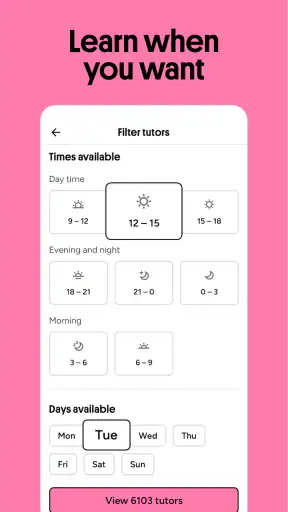
Private lessons require a clearer commitment than a self-guided vocabulary app. A common source of frustration is selecting times that look possible on a busy day but are difficult to repeat. I would rather choose a modest, dependable slot than make an ambitious plan that collapses after a week. Consistency gives the tutor useful context and gives the learner a chance to build momentum.
Before arranging a session, I would check the device I intend to use, the time zone shown by the schedule, and whether I can sit somewhere quiet enough to speak. These are simple checks, but they prevent a surprising amount of confusion. A lesson that appears missing may be a calendar misunderstanding, while a poor session may be caused by trying to study from a noisy commute rather than by the teaching itself.
Conversation anxiety is a genuine barrier
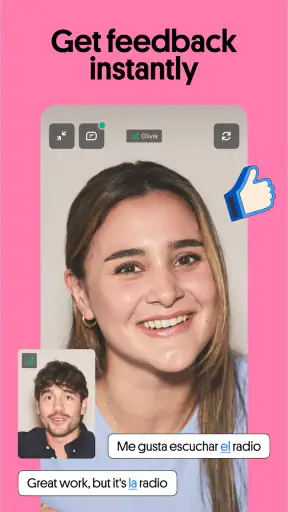
Some learners install a tutor app because they want to speak, then spend the first lesson trying to avoid making mistakes. That defeats the main advantage of personal instruction. I found it more productive to tell the tutor at the beginning whether I wanted frequent correction, gentle correction, or a focus on fluency. Without that conversation, a learner may interpret normal pauses and corrections as failure.
Preply is therefore best suited to people willing to participate actively. It is not an ideal choice for someone who wants to remain silent while an app marks answers right or wrong. The private setting can feel safer than a classroom, but it still asks you to produce language in real time. That is valuable practice, although it may be uncomfortable at first.
Setup checks that make the first lesson smoother
Start with a narrow, usable goal
The strongest preparation is specific. Instead of saying “I want to learn Spanish,” I would prepare a target such as handling a restaurant conversation, introducing myself at work, or explaining a recent problem. This gives the tutor something concrete to build around and makes it easier to judge whether the session helped. A narrow goal also prevents the first meeting from becoming a vague tour of grammar topics.
For a beginner, I would keep a short list of words or situations that cause immediate difficulty. For an intermediate learner, I would bring a few sentences I repeatedly say incorrectly. This turns the tutor’s attention toward useful corrections rather than allowing the lesson to drift into whichever topic appears first.
Check the basics before blaming the app
If a lesson does not open correctly, I would begin with ordinary checks: confirm that the app is running the current version, close and reopen it, verify the internet connection, and make sure the device has not switched to an unsuitable audio or video source. Preply’s current version is 6.137.0, and it requires at least iOS or Android version 9. Keeping the operating system and app reasonably current is a sensible first step when screens behave unexpectedly.
I would also check whether the problem affects only one lesson or the whole app. If browsing tutors works but joining a particular meeting does not, the issue may be tied to that session or schedule rather than the installation. If nothing loads, restarting the app and trying a different connection can quickly separate a local connection problem from a broader account issue.
Prepare a simple lesson workspace
The app is easier to use when the phone or tablet is treated as a lesson tool rather than a notification machine. I would silence unrelated alerts, keep a notebook nearby, and place the device where I can hear clearly without holding it throughout the conversation. A stable workspace also helps the tutor read your reactions and notice when you are struggling.
For language learning, notes are more useful when they record examples instead of isolated translations. I would write down one corrected sentence, one phrase worth reusing, and one question to revisit. This creates a small bridge between lessons. It also makes the next meeting more productive because you can begin by testing whether the new language has stayed active.
Use the first minutes to agree on the format
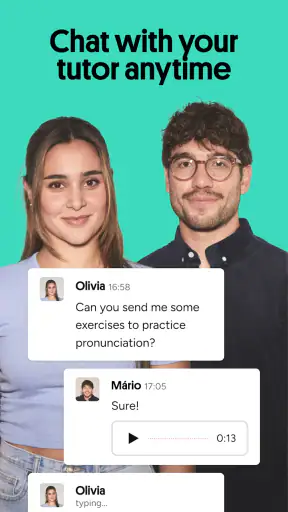
A short agreement at the beginning can prevent an awkward lesson. I would explain my level as honestly as possible, state the immediate goal, and ask how corrections will be handled. If I need time to think, I would say so rather than filling every pause with my native language. If I want homework or a recap, I would ask directly.
This is one of the app’s important trade-offs. The platform can help you find a person, but the quality of the learning relationship still depends on communication between learner and tutor. A clear request often improves a lesson more than changing apps.
Recovering when the workflow breaks
When the lesson will not start
If I tap into a scheduled lesson and something does not respond, I would avoid repeatedly changing settings at random. First I would confirm the lesson time, check the connection, restart the app, and try again. If the problem remains, I would record exactly what happened: whether the schedule was visible, whether the tutor appeared, and whether audio or video failed after entry. Specific details are more useful than a general complaint that the app is broken.
I would also try to determine whether the failure is on one device or across devices, if another suitable device is available. That does not require technical expertise; it simply narrows the cause. If the same account and lesson behave differently after a restart or connection change, the original issue was probably local. If the problem follows the account or session, contacting support with the time and visible error is more sensible than reinstalling repeatedly.
When sound or video becomes unreliable
Audio problems are especially damaging in a speaking lesson, but they are not always caused by Preply. I would check whether another app is using the microphone, whether wireless headphones are connected to the correct device, and whether the connection is stable enough for a live conversation. Switching to a simpler audio setup can be a useful test. If the tutor can hear me but I cannot hear them, that points toward a different check from a situation where neither side has sound.
Video is helpful for facial expressions and pronunciation cues, but clear audio is more important than a perfect picture. If the connection is struggling, I would prioritize hearing and speaking rather than spending the entire lesson trying to improve the image. That is a practical compromise, especially for learners whose main goal is conversation.
When a tutor match is not working
A disappointing lesson does not automatically mean the service failed. Sometimes the tutor’s style and the learner’s needs simply do not match. I would give the relationship a fair test, then make a deliberate decision. Signs of a poor fit include spending most of the session on topics unrelated to the stated goal, receiving corrections without explanations, or being unable to ask for a different pace.
On the other hand, a tutor who challenges you may not be a bad tutor. The useful question is whether the difficulty leads to progress. If I leave with clearer mistakes, practical phrases, and a next step, the lesson may have been demanding in a productive way. If I leave unsure what was practiced or how to improve, trying another tutor is reasonable.
When motivation drops between lessons
Private instruction can create accountability, but it does not automatically create daily study habits. I would connect each lesson to one small action: repeat a corrected dialogue aloud, write a short message using new phrases, or listen for one target expression during the week. These tasks are easier to complete than a vague promise to “study more,” and they give the next lesson a starting point.
For a busy person, the app works best when lessons are part of a wider routine rather than the entire routine. Someone who can only attend occasionally may still gain confidence, but progress will probably feel slower. If the schedule is repeatedly disrupted, a self-paced course may be a better temporary companion, while Preply remains useful for periodic speaking practice.
When the app is not the cause
Learning goals can be too broad
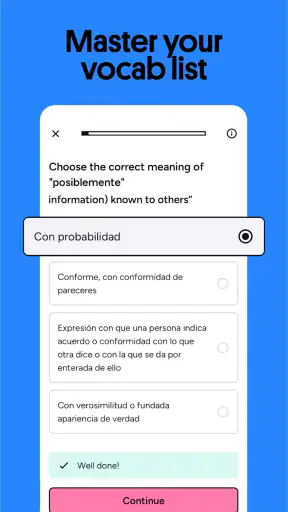
People sometimes judge a tutor platform against an expectation it was never designed to meet. If the goal is memorizing a large amount of vocabulary through quick repetitions, a dedicated flashcard tool may be more efficient. If the goal is understanding a complete grammar syllabus without interacting with a teacher, a structured course may provide a clearer sequence. Preply’s strength is the human exchange: asking follow-up questions, adapting examples, and practicing language that feels relevant to your life.
That strength comes with a cost in attention. You need to choose a tutor, communicate your needs, attend at a planned time, and review what you learned. Learners who dislike appointments or want perfectly predictable lessons may prefer a conventional course. Learners who already know the grammar but freeze when speaking may find the personal format far more useful than another set of automated exercises.
Technical limits can look like teaching limits
A weak connection can make a skilled tutor appear unresponsive. A noisy room can make pronunciation practice exhausting. A tired learner may also mistake normal concentration demands for poor lesson quality. Before changing tutors, I would repeat the session under better conditions if possible and compare the experience. This is particularly important for beginners, who may not yet know whether confusion comes from the language, the explanation, or the call itself.
The reverse is also true: technical smoothness does not guarantee a good lesson. If the conversation is easy to access but badly matched to your objective, no amount of troubleshooting will solve the educational problem. I would evaluate the platform and the tutor separately.
Privacy and comfort deserve practical attention
A private lesson involves speaking with another person through a connected device, so I would choose a setting where I am comfortable discussing the topics involved. I would avoid sharing personal information that is unrelated to learning and keep the conversation focused on the language goal. This is not a criticism of Preply specifically; it is sensible behavior for any service built around live communication.
The Everyone age rating makes the app broadly accessible, but younger learners still benefit from an adult helping them choose appropriate lesson goals and maintain a sensible schedule. The rating describes general suitability, not a substitute for supervision or judgment about individual circumstances.
How it compares with familiar alternatives
Compared with a gamified language app, Preply feels less immediate but more personal. A game-like tool is often better for a five-minute vocabulary session, a quick review while waiting, or building a basic daily habit without speaking to anyone. Preply is better when you need a real person to react to your pronunciation, ask follow-up questions, or reshape an explanation after you say, “I still do not understand.”
Compared with a large group class, the private format can be more focused. You do not have to wait for several classmates to finish, and the tutor can spend more time on your specific weaknesses. The trade-off is that you carry more responsibility for finding the right match and making each lesson count. A group course may offer a stronger sense of shared routine, while Preply offers more individual attention.
Compared with free videos and language podcasts, the app offers interaction rather than one-way exposure. Videos are excellent for hearing different voices and reviewing a topic repeatedly, but they cannot notice that you keep using the wrong verb ending in conversation. I would use those resources alongside Preply rather than treating them as direct replacements.
My practical verdict
After looking at the full workflow, I think Preply is a strong choice for learners who want private language instruction and are prepared to take part actively. Its most convincing benefit is not simply access to many languages; it is the opportunity to turn a vague ambition into a scheduled conversation with a teacher who can respond to your actual mistakes. That makes it especially useful for travelers, professionals, immigrants, exam learners, and anyone who understands more than they can comfortably say.
I would skip it if I wanted a completely self-contained course, disliked fixed appointments, or expected progress without practice between lessons. I would also avoid choosing a tutor casually. The platform can make the search easier, but the quality of the result depends heavily on the match, the clarity of the goal, and the learner’s willingness to speak.
The app itself is free to install, and its broad Everyone rating makes it approachable for a wide audience. The important practical question is not whether installation costs anything, but whether private tutoring fits your learning budget and routine. Before committing to a regular pattern, I would test how comfortably the schedule fits real life and whether the teaching style helps me participate rather than merely listen.
Preply Inc. has built an established education service, reflected in its strong user response and more than five million installs. Still, I would judge it by the quality of my learning loop: choose a suitable tutor, set one concrete objective, check the technical basics, attend prepared, and use the corrections afterward. For me, the app is most valuable when it turns speaking practice from an occasional intention into a repeatable habit.
My recommendation is therefore positive but specific. Use it when human feedback is the missing piece, begin with a focused goal, and give yourself permission to change tutors if the fit is wrong. Keep a self-study resource for vocabulary and review, and treat troubleshooting as a quick process rather than the center of the experience. Used that way, Preply is not a magic shortcut, but it is a practical route to the kind of live language practice that many learners struggle to arrange on their own.


